
Panel Replacement · Kenmore
Panel Replacement for Kenmore's 1980s Garage Doors
Kenmore's housing stock dates mostly to the mid-1980s, which means specific panel sizes and steel gauges. We bring matching stock from Bothell, 3 miles away.
Why It Happens Here
Most of the trouble we see on Kenmore panels traces straight back to when the house went up. Houses in this part of the service area cluster around 1984, and that year put a lot of raised-panel steel doors on garages with embossed wood-grain texture and a thin non-insulated core. That steel is now pushing forty years old. At the bottom section, where snowmelt and rain sit against the weatherstrip through a moderate cold winter, the paint goes first and the steel rusts from the inside of the panel out. By the time you see a bubble or a flake on the face, the metal underneath is already thinner than it looks.
The second common fault is impact damage on a single section - a trailer hitch, a bike, a kid's basketball hoop base clipping the bottom panel. On an 1980s-era door, that section is usually a standard width but an odd height compared to what's stocked today, so a dent doesn't always mean the whole door needs to come off the track. It means finding the right section to match what's already hanging there.
Either way, the fault is panel-specific, not opener-specific or spring-specific, and the fix is sized to the door you actually have, not a generic replacement.
Stocked Parts
We don't keep a depot in Kenmore - we run the job from Bothell, about 3 miles out, so what's on the truck when we arrive is what we loaded that morning. For Kenmore calls we carry the steel panel widths and raised-panel profiles that match the 1966-2001 construction window common across this stretch of the service area, since that's what most of the doors out here actually are.
What we can't always match on the first visit is an exact embossing pattern or a faded color from a 1980s door that's been in the sun for decades. Steel doors from that era came in a handful of panel styles, and manufacturers have changed tooling more than once since then. If your door is an uncommon profile, we may need to order the exact section rather than pull one off the truck, and we'll tell you that up front rather than sell you a close-enough match that looks wrong once it's hung.
What the Repair Takes
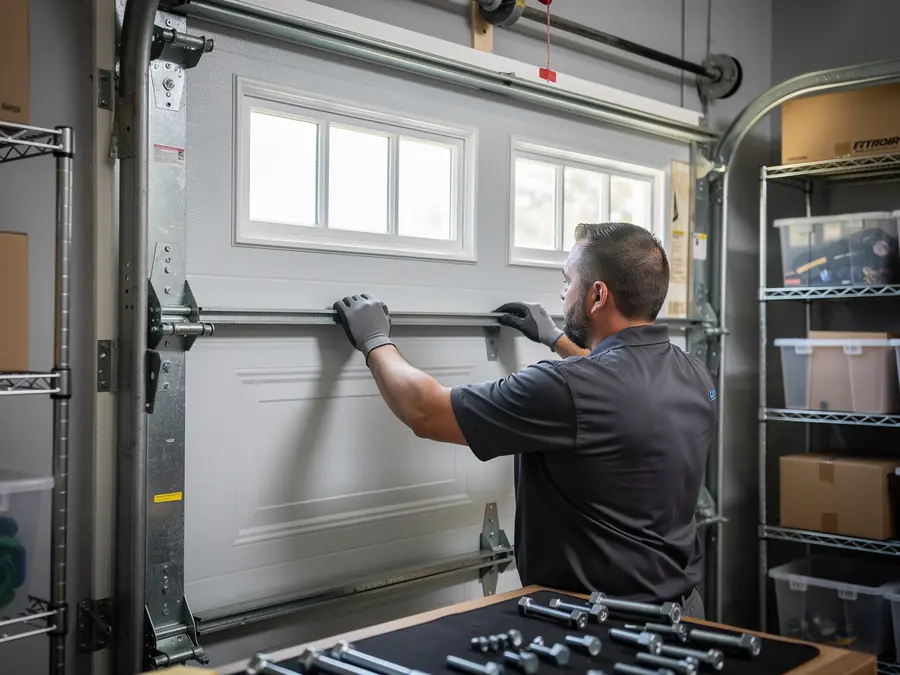
A single-panel swap on a sectional door means pulling the roller pins on either side of the damaged section, unbolting the hinges connecting it to the sections above and below, and sliding the new panel into the same track position. On a door that's original to an 1984-built house, the hinges and rollers are often as old as the panel, so we check those while the door is apart rather than put a new panel on worn hardware.
If more than one section is damaged, or if the track itself is bent from the same impact, that's a different job than a panel swap, and we'll say so before we start rather than after.
The Cost of This Job
We don't have a flat number to quote here without seeing the door - panel pricing depends on the width, whether it's insulated or not, and whether the exact style is in stock or needs ordering. What we can tell you is that a single-panel replacement on an existing door is a smaller job than full door replacement, and for most 1980s-era steel doors in this area, it's worth doing rather than replacing the whole door, provided the track and opener are sound.
The one place it stops making financial sense is when a door has two or more damaged panels and visible rust along the bottom sections - at that point you're paying for parts that will likely need replacing again within a few years, and a full door replacement often costs less over time than piecing one together.
How It Shows Up
The call we get from Kenmore homeowners is usually one of two things: a dented or caved-in panel from an impact, noticed right away, or a slow discoloration and bubbling along the bottom section that's been there for months before anyone calls. The second one is the 1980s-steel problem - moisture working under the paint during our cold, wet winters, invisible until the rust breaks through.
A door that's cosmetically fine but suddenly harder to lift, or that binds partway up, can also point to a panel that's warped rather than just dented - steel panels from this era can bow slightly under heat or impact without visibly cracking, and that bow throws off the whole section's travel in the track.
Booking a Visit
We cover Kenmore from our Bothell shop, so when you call we're scheduling a drive, not a walk-in. Tell us the panel size if you know it, or just the door's rough age and whether it's one section or more than one - that's usually enough to know what to load before we head out. If you want the general rundown on what panel replacement involves across the wider service area, that's covered on our Bothell panel replacement page; this page is specifically about what we see on Kenmore's own housing stock. You can also see the rest of what we handle in Kenmore on our area page.
FAQ
Questions about this
Why do Kenmore garage doors rust at the bottom panel specifically?
Most houses in this part of the service area were built around 1984, when steel sectional doors had a thinner, non-insulated core. The bottom panel sits closest to standing moisture and snowmelt through our cold, wet winters, so paint failure and rust start there first, long before the rest of the door shows wear.
Can you match the panel style on an older Kenmore door?
Usually, since most of the housing stock here falls in the 1966-2001 range and we stock panel widths common to that era. Uncommon embossing patterns or faded original colors sometimes need an ordered match rather than a truck-stock panel - we'll tell you which case you're in before starting.
Do you have a shop in Kenmore?
No. We run Kenmore calls from our Bothell location, about 3 miles away. We load the truck for the job before we drive out, which is why it helps to know the panel size or door age when you call.
Is it worth fixing one panel or replacing the whole door?
If it's a single damaged section on an otherwise sound door with good track and hardware, a panel swap makes sense. Once you've got two or more damaged panels plus rust along the bottom, you're usually better off replacing the whole door rather than paying for parts that will need doing again soon.
Tell us what your door is doing.
We serve Bothell, WA and nearby communities. Every job starts with a diagnosis, so you know what failed before any work begins.