
Spring Repair · Bothell, WA
Garage Door Spring Repair Across the Bothell Area
Torsion and extension spring repair for Bothell-area homes built mostly between 1966 and 2001, where cold damp winters put extra load on aging spring hardware.
Where This Job Goes Sideways
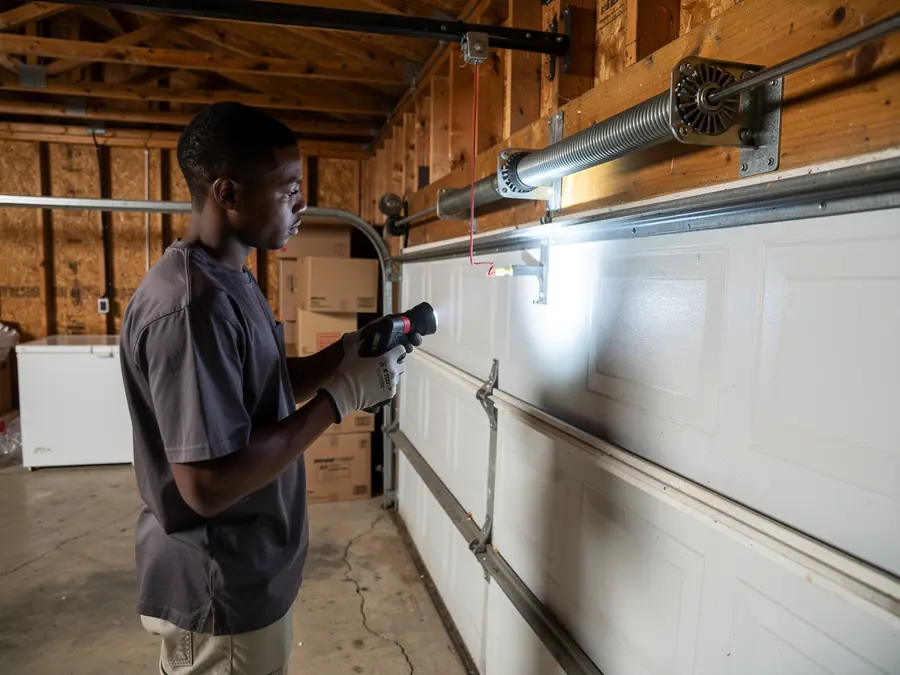
A broken spring job looks simple until it isn't. The spring itself is a ten-minute swap for someone who does it daily, but the trouble shows up around it. Houses in this service area were mostly built between 1966 and 2001, and a lot of that stock still runs the original drums, bearing plates, and cable that came with the door. Swap a spring onto worn bearings or a bent shaft and you've fixed the symptom, not the problem - the new spring will be chewing itself up again inside a year.
The other place this goes sideways is sizing. A spring is wound for a specific door weight and a specific cycle count. Insulated doors added later, double layers of weatherstripping, even a new heavier opener bolted on top - all of that changes the load without anyone recalculating the wind. We see mismatched springs often enough across the 37 named areas we cover that we check the whole hardware set before we touch anything, not just the part that snapped.
We don't replace a spring on a door with a cracked panel or a track that's already pulling off the wall. Fixing the spring on a door that's structurally done just moves the next failure a few weeks down the road, and that's not a job worth doing.
The Cost of This Job
We're not going to put a number here that doesn't hold up once a tech is standing in your driveway looking at the actual hardware. Spring jobs vary by door size, by whether you've got one spring or two, torsion or extension, and by what the bearings and cable look like once we're under the hood. What we can tell you is what drives the cost up or down: single vs. double door, how old the drums and cable are, and whether this is a straight swap or a swap plus the worn parts around it.
Given that median household income across the service area sits at $138,256, most of the calls we get are homeowners who want the job done right the first time rather than the cheapest patch - which usually means replacing the cable and bearings alongside the spring rather than coming back out in eight months. That's a judgment call we make on site, and we'll tell you plainly which parts are worth doing now and which can wait.
One honest limit: if your door is older than its opener and the drums are pitted or the shaft is grooved, a spring-only repair is a short-term fix. We'll say so before we quote it, not after.
How It Shows Up
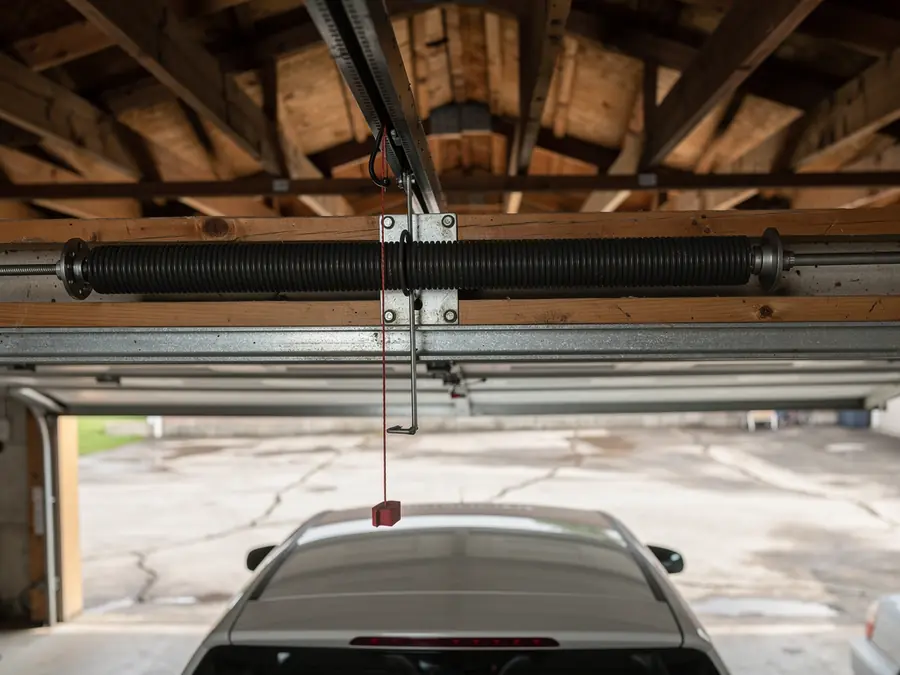
Most of the calls sound the same. The door won't budge, or it slams down fast on the way closed because nothing's holding the weight anymore. Sometimes it's a loud bang from the garage - that's usually the spring itself letting go, not the opener. Other times it's slower: the door gets harder to lift by hand every week until one morning it just stops moving.
If you've got an opener, it'll often still hum or click like it's trying, but the door won't lift - the motor isn't built to carry the whole weight of the door once the spring's gone, and forcing it that way is how openers burn out early. On a torsion setup you'll sometimes see the gap in the wound spring on the shaft above the door; on an older extension-spring door the spring itself may be visibly stretched or hanging loose along the track.
Across the roughly 84,943 owner-occupied houses in this service area, the door that fails first is almost always the original one or its first replacement - the hardware that's been cycling since the house was built or since the last remodel.
Why It Happens Here
Springs wear out everywhere, but a few things make it a steadier call here than it might be somewhere drier or newer-built. This is a cold, moderate climate - not brutal, but consistently damp, and that dampness works on unsealed spring coils and cable strands over the years, pitting them faster than a dry climate would. A spring rated for a certain number of cycles doesn't care about the weather on paper, but corrosion on the coil changes how it flexes, and that shortens its working life in practice.
The second factor is age of the stock itself. With most housing here dating to the 1980s and 90s and a fair chunk going back to 1966, a lot of these doors are on their second or third spring already, sometimes on hardware nobody's inspected since it was installed. Original torsion setups from that era used lighter-gauge shafts and smaller bearing plates than what's standard now, so when a spring finally lets go, it's often taking a bearing or a cable guide with it.
Put the two together - damp cold working on metal year-round, and a housing stock old enough that most of the springs out there are original or near it - and spring failure stops being a random event. It's closer to scheduled maintenance that homeowners just haven't scheduled yet.
Service areas
Where we work around Bothell
Bothell and 6 nearby communities, each with its own page.
FAQ
Questions about this
How do I know if it's the spring and not the opener?
If the opener motor runs but the door won't lift, or lifts only a few inches before stalling, that's almost always the spring, not the motor. A true opener failure usually means the motor won't engage at all. Listen for a loud bang before the door stopped working - that's the spring snapping, and it's a strong giveaway.
Can I replace just one spring if I have two?
You can, but we usually don't recommend it. Two springs on a double door wear at close to the same rate, and running one old spring against one new one puts uneven load on the door. Most of the time it's cheaper in the long run to do both at once rather than call us back out in a few months for the second one.
Is it safe to open the door by hand until the spring gets fixed?
Briefly, yes, if you disconnect the opener first and lift slowly - but a door with a broken spring is far heavier than it looks, and it can drop fast if the cable or track is also compromised. We'd rather you leave the car in the driveway for a day than get hurt muscling a dead-weight door open.
Tell us what your door is doing.
We serve Bothell, WA and nearby communities. Every job starts with a diagnosis, so you know what failed before any work begins.