
Roller Replacement · Mercer Island
Roller Replacement for Mercer Island's 1970s Garage Doors
Mercer Island homes built around 1973 still run original steel rollers on narrow track. We travel from Bothell to replace worn rollers before the track bends.
Why It Happens Here
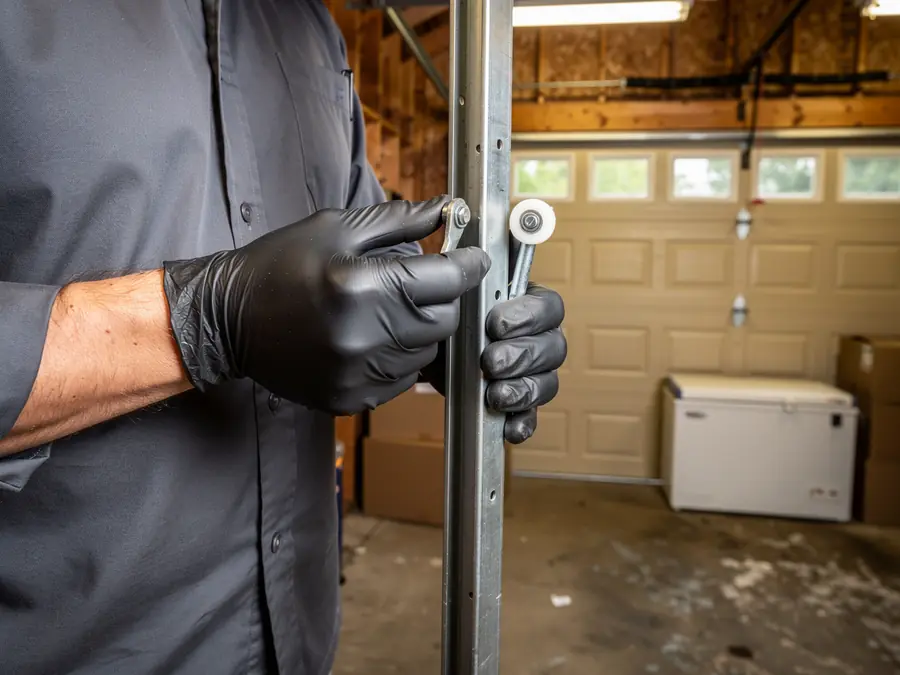
The fault we see most on Mercer Island is steel rollers that have worn their stems down inside a track that was never that forgiving to begin with. Most of the housing stock here went up around 1973, and doors from that era were hung on narrower steel track than what gets installed today. The rollers that came with those doors were plain steel on a bare stem, no bearing, no nylon sleeve. Thirty-plus years of that steel riding against steel wears a groove into the stem, and once the roller starts wobbling in the track, it drags instead of rolling.
That wobble is the whole problem. A roller that drags pulls the track out of true a little more every cycle, and on a 1973 door the track is already narrow enough that it doesn't take much to bend it. By the time an owner notices the noise, the roller has usually already started chewing at the track edge. Catching it at the roller stage is a lot cheaper than catching it after the track has to come off too.
Booking a Visit
We run out of Bothell, about 14 miles from Mercer Island, so there's no local branch or drop-in counter here - a visit means a truck comes to you. That's worth knowing up front because it means scheduling a roller job works best when you can tell us a bit about the door on the phone first: how old it is, whether it's making noise on the way up or the way down, how many panels. It saves a second trip if the stem size or track width turns out to be something we need to bring specific parts for.
We don't keep a standing crew stationed on the island, so this isn't a same-hour walk-up service. It's a scheduled call, same as any job we drive out to. For a roller swap that's rarely a problem - this isn't an emergency repair, it's maintenance before the track pays for it.
How Long It Takes
A full set of ten rollers on a double door, done on-site, is usually a couple hours of work once the truck's on the driveway - most of that is removing the old stems cleanly without bending the track further, since on a 1973 door the track has already taken decades of wear and doesn't like being forced. Single-door jobs go faster.
Where it runs long is when a stem has rusted into the bracket, which isn't rare on doors this old, or when the track itself needs a light straightening pass alongside the roller swap. We'll tell you on-site if that's what we're looking at rather than guessing over the phone. One honest limit: if the track is bent badly enough that straightening won't hold, that's a track replacement job, not a roller job, and we'll say so instead of patching it.
Where This Job Goes Sideways
The mistake we see owners make is waiting until the door is loud enough to notice from inside the house. By then the rollers aren't just worn, they're usually out of round, and an out-of-round roller doesn't travel straight in the track - it hops. Every hop puts a small dent in the track wall. Enough dents and the track needs more than a roller swap to fix.
The other place it goes sideways is mismatched rollers. On a door built around 1973, we sometimes find a mix of roller sizes from a prior partial repair - someone replaced two or four rollers at some point and left the rest original. Mixed roller sizes on the same track run rougher than all-old or all-new, because the door isn't riding level anymore. We'd rather replace the full set once than keep patching a mismatched one.
How It Shows Up
The first sign is usually a grinding or rattling sound as the door travels, worse at the top or bottom of the run where the roller is working hardest against the curve of the track. Owners often describe it as the door sounding rougher than it used to, even if it's still opening fine.
Cold mornings make it worse. This area sits in a moderate cold climate band, and old grease in a worn roller stem stiffens up overnight, so the door can feel sluggish or jerky on the first open of the day and smooth out once it's run a few times. That's not the opener struggling - it's usually the rollers telling you they're past due.
What the Repair Takes
Most of what we install on replacement is sealed-bearing nylon rollers rather than the bare steel the door came with. Nylon runs quieter, doesn't need the same grease upkeep, and rides more evenly in an older, narrower track - which matters on a door from 1973 that's already seen decades of wear. For households weighing noise as much as function, nylon is usually the upgrade worth asking about, and it's a common enough request given the income range in this area.
We also check the track brackets while we're in there, since a loose bracket will undo a fresh set of rollers fast. If the track itself is bent past a light straightening, that becomes a separate conversation about track replacement rather than rollers - we won't put new rollers into a track that's going to keep chewing them up.
FAQ
Questions about this
Do you have a crew based on Mercer Island?
No. We run out of Bothell, about 14 miles away, and drive out for scheduled jobs. There's no local branch here, so roller replacement on the island is booked as a visit rather than a walk-in appointment.
Why do Mercer Island doors wear rollers faster than newer ones?
A lot of the housing here dates to around 1973, when doors shipped with plain steel rollers on narrow track. That hardware wears faster than modern nylon sealed-bearing rollers and the older track has less tolerance for a wobbling roller before it bends.
Can you just replace the noisy rollers and leave the rest?
If only a couple are worn and the rest are the original matched set, sometimes yes. But we often find mixed roller sizes from a prior partial fix, and mixed sizes ride unevenly. We'd rather tell you that up front than patch a mismatch.
Will cold weather make the noise worse?
Often, yes. This area sits in a moderate cold climate band, and stiff grease in an old roller stem makes the door sluggish on a cold morning before it loosens up after a few cycles. That stiffness is usually the roller, not the opener.
Tell us what your door is doing.
We serve Bothell, WA and nearby communities. Every job starts with a diagnosis, so you know what failed before any work begins.